
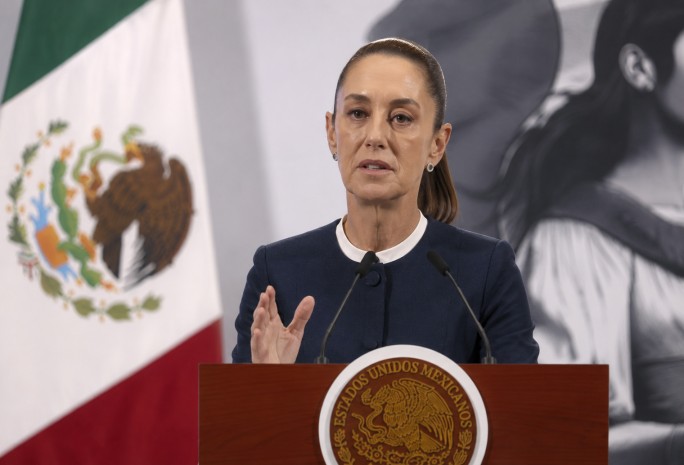
In response to the United States imposing a new 10% tariff on Mexican exports that are not covered under the USMCA trade agreement, Mexican President Claudia Sheinbaum announced efforts to ensure long-term trade stability. Sheinbaum characterized the tariff as a unilateral decision by the U.S. and emphasized Mexico’s focus on preventing future unexpected tariffs while striving to maintain preferential trade conditions over other nations.
Sheinbaum acknowledged the complexities in negotiations with the U.S., which have been influenced by President Donald Trump’s protectionist trade policies. The recent tariff adds to the ongoing challenges Mexico faces with sector-specific levies on products such as automobiles, steel, aluminum, and various raw materials. These sector-specific tariffs highlight the urgency for Mexico to secure a comprehensive long-term agreement that can offer more predictability for investors and bolster the nation’s trade standing.
As the U.S. and Mexico engage in discussions regarding the USMCA trade agreement, contrasting positions have emerged. U.S. officials are advocating for stricter regional content requirements in pivotal industries, which could potentially alter the dynamics of the agreement. In contrast, Mexico is pushing for regional integration that would not only benefit both economies but also maintain the strong trade ties the countries share.
The review of the USMCA trade agreement presents a critical juncture for both nations as they navigate the complexities of international trade. While the U.S. aims to tighten regulations, Mexico’s stance is rooted in fostering an environment that supports mutual economic growth and stability. The outcome of these discussions will play a significant role in shaping the future economic landscape between the two neighboring countries.