
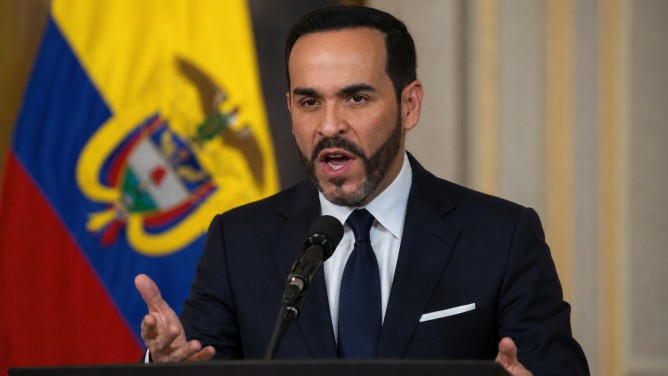
In a decisive move, Colombian President Abelardo de la Espriella has instructed authorities to initiate operations targeting migrants who are residing in the country without proper documentation, as well as foreign nationals suspected of criminal involvement. The directive was made during a cabinet meeting in the city of Barranquilla, where the president emphasized the need for coordinated efforts between police forces and migration officials, set to begin within the week. The initial focus will be on migrants engaged in unlawful activities, followed by those who have not yet regularized their immigration status.
In conjunction with these immigration measures, President de la Espriella has pledged a more rigorous crackdown on criminal organizations engaged in drug trafficking, illegal mining, extortion, and smuggling. He characterized these groups as terrorist entities, signaling a shift towards more stringent enforcement policies. These announcements have sparked a wave of criticism from opposition leaders and human rights advocates who argue that such policies could jeopardize Colombia’s previously supportive stance towards migrants, particularly those fleeing the crisis in Venezuela.
The issue of Venezuelan migrants is particularly pressing, as they form the majority of the migrant population in Colombia. Many are living without regular immigration status, and critics of the government’s new approach are calling for efforts to regularize these individuals rather than resorting to sweeping deportation actions. They contend that the focus should be on integrating migrants into society, which would alleviate some of the challenges associated with irregular migration.
Additionally, the president’s remarks have ignited a debate over the language used in immigration discourse, as Colombian law refers to migrants without proper documentation as being in an “irregular” status, avoiding the term “illegal.” This distinction is significant in legal contexts and affects how policies are perceived and implemented. The controversy highlights the complexities of immigration issues in Colombia and the balancing act between maintaining national security and upholding human rights.