
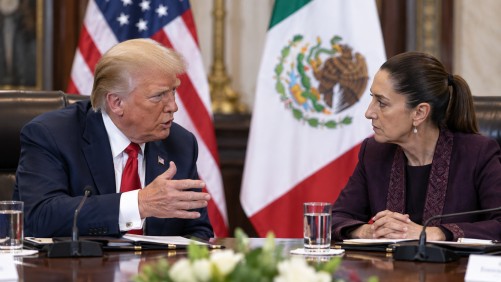
Amid ongoing concerns over drug trafficking routes that stretch across the Americas, the United States has highlighted the need for more aggressive action from Mexico in tackling the issue. In a recent presidential determination addressed to Congress, U.S. President Donald Trump acknowledged the efforts of Mexican President Claudia Sheinbaum’s administration in increasing drug seizures and dismantling illegal laboratories. However, he emphasized that these measures fall short in curbing the flow of illicit drugs into the U.S.
Trump’s communication underscored the importance of intensifying actions against drug-trafficking organizations in Mexico, particularly focusing on their financial networks and the complicity of officials who may be aiding these criminal entities. The U.S. president urged Mexican authorities to enhance their enforcement by identifying, arresting, and prosecuting public officials believed to be connected to drug cartels.
Mexico is part of a broader list of nations identified by the U.S. government as significant drug-transit or illicit drug-producing countries. This list includes Canada and several nations from Central America and the Caribbean, such as Guatemala, Honduras, El Salvador, Haiti, the Dominican Republic, Jamaica, and Belize. These countries are recognized as key points in international drug-trafficking routes.
The call for increased measures comes despite recent strides made by Mexico, where additional security forces have been deployed along the U.S.-Mexico border. While these efforts have led to notable successes, such as the dismantling of clandestine labs, Trump contends that more robust actions are necessary to effectively dismantle the drug-trafficking networks operating across extensive areas of Mexican territory.
This development highlights the ongoing challenge faced by both the U.S. and Mexico in addressing the complex and pervasive issue of drug trafficking, which continues to strain bilateral relations and demand coordinated international efforts.