
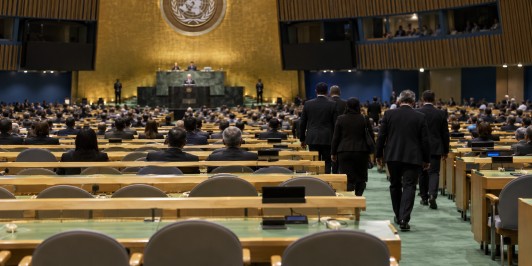
The United Nations General Assembly in New York became a stage for international tensions as representatives from Iran and Cuba exited the chamber during U.S. President Donald Trump’s speech on September 22. The address, which highlighted Trump’s administration’s stance on foreign policy challenges, particularly targeted Tehran and Havana, prompting strong reactions from their delegations.
As Trump began his remarks criticizing Iran, members of the Iranian delegation chose to leave the assembly. The U.S. president discussed military operations against Iran and emphasized the possibility of further action if no agreement was reached. Iranian President Masoud Pezeshkian and Foreign Minister Abbas Araghchi, both present in New York for the assembly, were not in the chamber at the time of the speech.
In his address, Trump presented a choice for the international community to either support reaching an agreement with Iran or to intensify economic pressures on the country. This rhetoric underscored the ongoing tensions between Washington and Tehran, with the U.S. seeking to galvanize international support against Iran’s policies.
The Cuban delegation also staged a walkout in response to Trump’s characterization of Cuba as a “failed state.” The U.S. president called for significant changes on the island and asserted that the U.S. would prevent foreign adversaries from establishing a foothold there. Trump’s remarks echoed his administration’s hardline stance against the Cuban government, aiming for a shift in the political landscape of the island nation.
These departures occurred during a broader speech where President Trump addressed various international issues, reinforcing his administration’s foreign policy positions before a global audience. The reactions from Iran and Cuba highlighted the strained relationships and differing perspectives that continue to shape international diplomacy.