
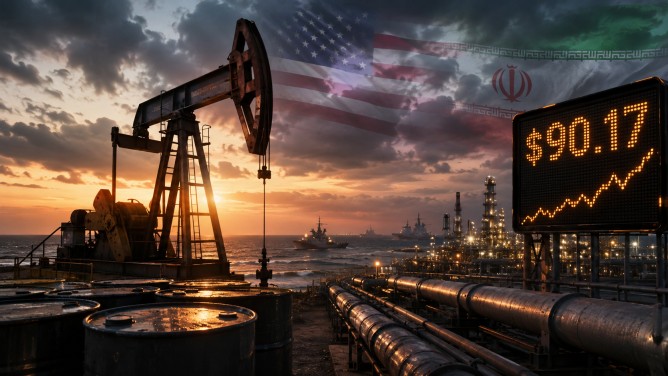
As negotiations between the United States and Iran concluded without a peace agreement, oil prices surged, stirring concerns over the potential for prolonged conflict and its impact on global energy supplies. The price of Brent crude soared above $90 a barrel, peaking around $91.63, marking its highest point since July 30. This increase followed a firm stance by US President Donald Trump, who demanded Iran’s capitulation and cautioned that the situation might escalate if diplomatic attempts fail.
The strategic Strait of Hormuz, a vital artery for global oil shipments, has become a focal point of concern. A noticeable decline in the number of commercial vessels traversing this critical passage has raised alarms over the prospect of extended disruptions in oil transport. Iran has signaled a potential shift towards a more assertive military posture should the talks collapse, with a recent attack on a cargo ship in the strait escalating fears regarding maritime security in the area.
Investors are now bracing for the possibility of a protracted disruption in oil supplies. Any significant closure or reduction in traffic through the Strait of Hormuz could further drive up crude prices, intensifying the economic impact. The region, already a hotspot of geopolitical tension, faces the risk of exacerbating an already volatile energy market.
Experts are cautioning that the ongoing instability in the Middle East, combined with the conflict in Ukraine, could deliver additional shocks to global energy markets. Such developments could lead to elevated prices for oil and gas, affecting economies worldwide. The dual impact of these geopolitical tensions is likely to keep energy markets on edge, with significant implications for both producers and consumers.