
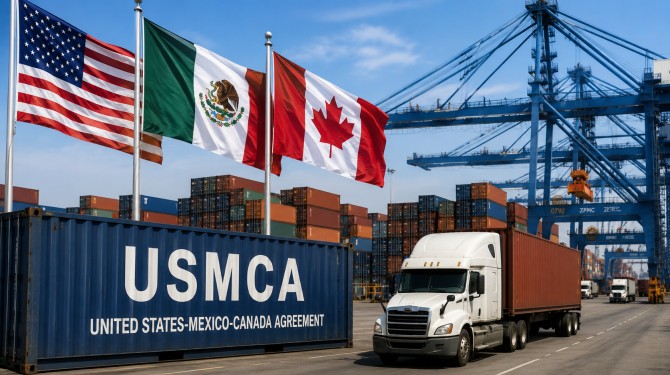
Mexico has embarked on its initial annual evaluation of the United States-Mexico-Canada Agreement (USMCA), aiming to alleviate rising trade tensions with the United States amid threats of new tariffs. The review takes place as Mexican President Claudia Sheinbaum prepares to meet with U.S. Trade Representative Jamieson Greer in Mexico City. This meeting follows technical discussions that have already been held between officials from both countries.
The discussions are occurring against the backdrop of U.S. President Donald Trump’s contemplation of imposing additional tariffs on imports from over 60 countries, Mexico included. The potential for these tariffs has heightened the urgency of the ongoing negotiations surrounding the trade agreement. As part of the talks, Greer has indicated to U.S. lawmakers that provisional agreements on the USMCA might be achieved by the end of 2026.
Nevertheless, more intricate matters such as rules of origin, labor standards, and environmental commitments are anticipated to extend the negotiations into 2027. These complex issues require careful deliberation and consensus among the parties involved to ensure that the trade agreement functions smoothly and fairly for all members.
A key demand from the United States in these negotiations is the implementation of stricter rules of origin. The U.S. is eager to ensure that products benefiting from the trade agreement are genuinely manufactured within North America, rather than being channeled through Mexico from third countries. This stipulation is part of a broader effort to bolster North American manufacturing and prevent circumvention of the agreement’s benefits.