
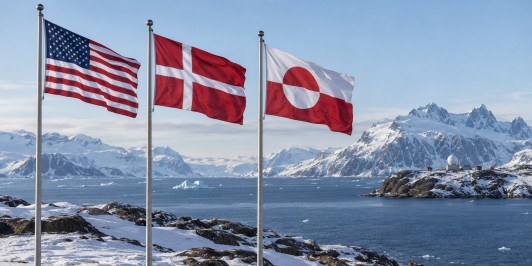
The strategic landscape of the Arctic and North Atlantic is poised for significant change as the United States, Denmark, and Greenland have formalized a new security cooperation agreement. Signed during the United Nations General Assembly in New York, this trilateral pact aims to bolster military collaboration in the region, amidst growing geopolitical interest in its strategic and resource-rich positioning.
Under the terms of the agreement, the United States will be allowed to expand its military footprint in Greenland, a self-governing territory within the Kingdom of Denmark. This includes the establishment of new defense areas at Narsarsuaq and Mestersvig, as well as the development of a missile defense system referred to as the “Golden Dome.” The pact marks a substantial amendment to the existing 1951 US-Denmark defense agreement, facilitating broader access for US military operations across Greenland and its territorial waters.
While the agreement does not change the sovereignty of Greenland, it introduces measures to prevent non-NATO countries from setting up military installations on the island. It also sets parameters on foreign investments in critical infrastructure and resource extraction sectors, reflecting concerns over security and economic control.
This development follows a period of heightened tension after US President Donald Trump suggested the acquisition of Greenland, emphasizing its strategic importance. Although the acquisition proposal was not actualized, the newly signed agreement underscores the US’s interest in enhancing its military capabilities in the Arctic, a region increasingly viewed as vital for both strategic and resource considerations.
The agreement still requires ratification through Denmark and Greenland’s parliamentary procedures, ensuring respect for Greenland’s right to self-determination and the sovereignty of the Kingdom of Denmark. Currently, the US operates the Pituffik Space Base in northwestern Greenland, and the new provisions could lead to the most significant expansion of American military infrastructure on the island since the Cold War.