
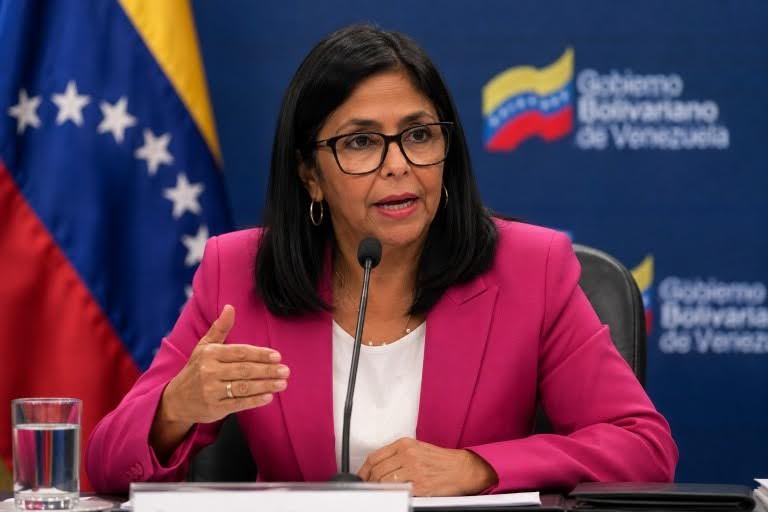
In a bid to quell mounting criticism, Venezuela’s interim president, Delcy Rodríguez, has staunchly defended a contentious energy agreement with the United States. Despite intense domestic backlash, Rodríguez asserted that Venezuela maintains both ownership and sovereignty over its oil reserves. Her leadership began earlier this year following the removal of Maduro through a U.S.-backed operation. During a national address, she refuted claims that the deal amounted to ceding national assets to Washington.
Rodríguez highlighted the agreement’s potential to generate over $209 billion, positioning it as a transformative opportunity for Venezuela to become a leading energy powerhouse. She emphasized that without the necessary investment, technology, and infrastructure, the country’s substantial underground oil reserves would remain untapped and economically unproductive for Venezuelans. The deal, reportedly hammered out in secretive negotiations over several months, grants the U.S. significant control over Venezuela’s crude reserves, which are the largest proven reserves globally, surpassing even those of Saudi Arabia and Iran. The agreement involves 17 strategic oilfields, aiming for a production target exceeding 1.5 million barrels per day.
The revelation of this arrangement has sparked a fierce backlash from both opposition leaders and factions within Rodríguez’s own political circle. Critics decry the agreement as a resource seizure, with a former executive from the state oil company labeling it a breach of national sovereignty, a move unprecedented in Venezuela’s history. Demonstrators have taken to the streets of Caracas to protest what they view as foreign encroachment, and social media has been abuzz with satirical commentary about a potential rebranding of the state oil company.
This development represents a dramatic shift for Rodríguez and her political allies, who have historically opposed foreign influence over Venezuela’s natural resources. Rodríguez herself has previously issued warnings against such agreements. Opposition figures are voicing concerns that this deal could derail efforts to establish democratic elections in Venezuela, as uncertainty looms over the timing of any future vote. Critics argue that the agreement’s long-term economic benefits hinge on transparent governance and free elections, cautioning that without these elements, the deal could rest on shaky ground.