
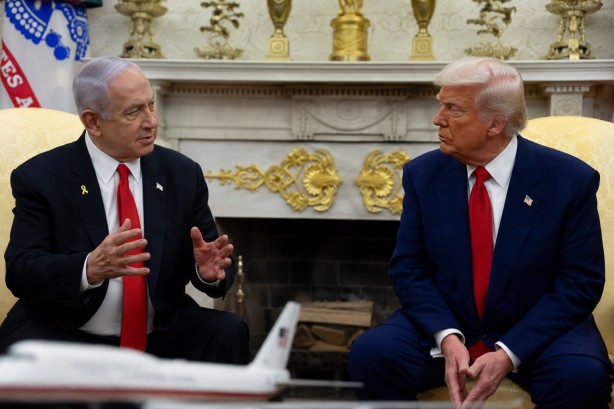
At the White House, Israeli Prime Minister Benjamin Netanyahu and U.S. President Donald Trump engaged in a detailed dialogue mainly centered on Iran, regional security issues, and the future trajectory of U.S.-Israel relations. During their meeting, they examined three potential strategies concerning Iran: pursuing a diplomatic approach, enhancing economic sanctions, or contemplating military measures. This exchange was characterized as an open discussion of possibilities rather than a push for any particular course of action.
Netanyahu reportedly voiced skepticism about Iran’s commitment to any future agreements but refrained from advocating for the U.S. to initiate new military interventions. Both leaders underscored their mutual goal of preventing Iran from obtaining nuclear weapons. They also explored strategies for ramping up economic pressure on Tehran while trying to mitigate any adverse effects on global energy markets. Netanyahu emphasized that Iran should not exploit the Strait of Hormuz as a bargaining chip in negotiations.
The conversation extended to regional security matters, including Israel’s military activities in Syria and southern Lebanon. Netanyahu is said to have used maps to illustrate Israel’s security challenges and stressed the importance of maintaining defensive stances to counter potential threats. These discussions highlighted the ongoing security collaborations between the two nations, particularly in volatile regions.
In addition to these topics, the leaders discussed the long-term defense partnership between the U.S. and Israel. Netanyahu suggested a gradual decrease in Israel’s dependence on U.S. military aid over the coming decade, with a view to expanding collaborative defense research and development projects. This proposal reflects an effort to strengthen bilateral defense ties while fostering greater self-sufficiency for Israel.
Contrary to some reports of discord, an Israeli official emphasized that the relationship between Netanyahu and Trump remains strong and cooperative, despite any differences in regional policy views. The discussions at the White House reaffirmed the close alliance between the two nations and their shared commitment to addressing mutual security concerns.